
For most of my career, the challenge was finding opportunities.
Now, the challenge is deciding which opportunities deserve my energy.
That is a strange transition.
For decades, I built my identity around being useful. Give me a complicated problem, a struggling process, an unclear situation, or a team that needed direction, and I was interested.
I enjoy making things better.
I enjoy creating systems where confusion becomes clarity. I enjoy helping people understand why something matters, what success looks like, and how they can contribute.
That has shaped much of my career.
I have built software teams, led operations, improved processes, supported automation initiatives, and helped organizations create more sustainable ways of working.
I know how to build.
The harder lesson I am learning now is that the ability to build something does not mean I should build it.
The Addiction To Being Useful
Being useful feels good.
There is satisfaction in solving problems that others cannot solve. There is pride in being the person people call when something is difficult.
But there is a trap.
When you become known as someone who can fix things, you start seeing every problem as your responsibility.
A broken process becomes something to repair.
A struggling team becomes something to rescue.
A new opportunity becomes something to evaluate.
Over time, usefulness can quietly become obligation.
I have had to learn that responsibility requires choice.
Not every problem needs my solution.
Not every opportunity deserves my attention.
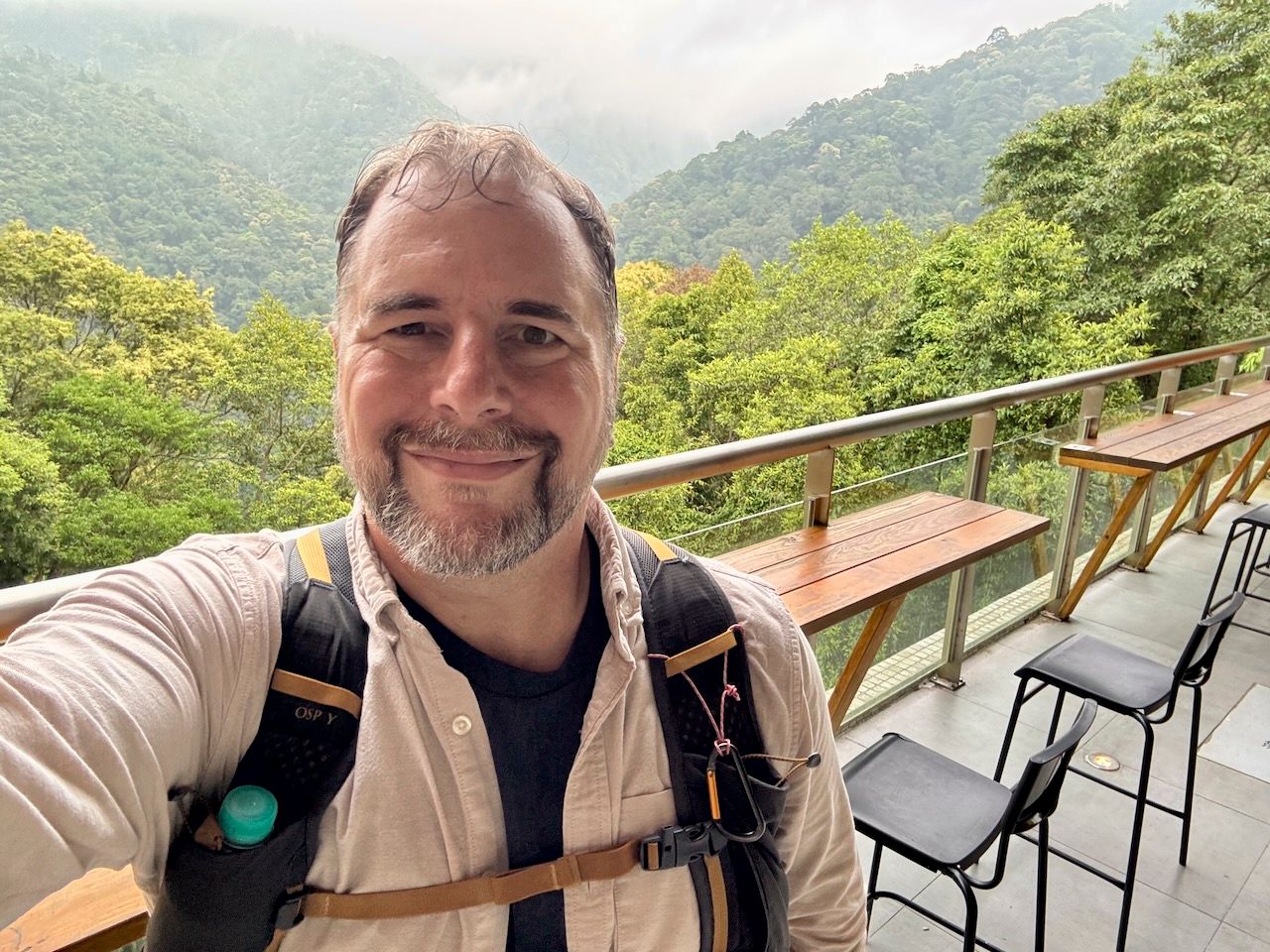
Not every mountain is mine to climb.
The older I get, the more I realize that every yes is a commitment to something else.
A yes to one project may be a no to family time.
A yes to one business opportunity may be a no to health, reflection, or relationships.
The question is no longer simply:
“Can I do this?”
The better question is:
“Should I do this?”

Twenty-Five Years Of Building
Looking back, the pattern across my career is clearer now.
The technology was rarely the most important part.
The systems mattered. The processes mattered. The tools mattered.
But the real work was always people.
At Axelerant, I learned that ownership does not come from telling people to care more. It comes from creating clarity around why the work matters, what success looks like, and how decisions should be made.
At LN Webworks, I saw another version of the same lesson. Growth requires more than activity. It requires alignment, accountability, and meaningful ownership. A full pipeline or a busy team does not automatically create results.
The common thread was never simply execution.
It was helping people and organizations move from confusion to clarity.
That is the work I have always enjoyed.
The Reality Behind Building A Business
Recently, I had an opportunity to help grow a professional services company.
On paper, it was appealing.
There was a good product. There was a real opportunity to help customers. There was potential.
But when I looked honestly at what it would require, I had to acknowledge something.
Building a $1M professional services business is not just about expertise.
The expertise is only the beginning.
It requires:
- Clear positioning.
- Strong marketing.
- Consistent content.
- Outbound relationship building.
- Personalized conversations.
- Sales discipline.
- Proposal development.
- Delivery excellence.
- Operational consistency.
None of those things are impossible.
I have done many of them before.
But the question was not whether I could.
The question was whether that was where I wanted to invest the next chapter of my life.
After twenty-five years in professional services, I felt something I needed to respect.
I was tired.
Not tired of helping people.
Not tired of solving meaningful problems.
Tired of constantly building the engine that delivers the help.
There is a difference.

Capability Is Not The Same As Alignment
One of the hardest parts of experience is that your past success creates many possible futures.
That sounds like a gift.
It is.
But it is also a responsibility.
When you have many options, choosing becomes harder.
My purpose has always been simple: Live fully by living deliberately.
That means my decisions need to consider more than income or status.
I need to ask:
Does this work help me become the person I want to be?
Does it strengthen my relationships?
Does it allow me to take care of myself?
Does it create meaningful contribution?
The Sustainable Ownership principles I have written about in organizations apply personally too. A sustainable life requires clarity of purpose, healthy boundaries, resilience, trust, shared learning, and thoughtful choices about resources. You can explore more through my framework cheat sheet on purpose, principles, and values.
The goal is not maximum output.
The goal is meaningful output that can continue.
Why Teaching Feels Different
This is one reason my work with English students has surprised me.
Teaching feels different.
In leadership, the impact can take months or years to become visible.
A culture change takes time.
A process improvement takes time.
A team transformation takes time.
Teaching provides a different feedback loop.
A student who was afraid to speak says a complete sentence.
A learner finally understands a concept that frustrated them.
Someone gains confidence because they realize they are capable.
Those moments are small.
They are also meaningful.
The more I teach, the more I realize that good teaching and good leadership share many qualities.
Both require:
- Listening before responding.
- Understanding the person, not just the problem.
- Creating enough safety for people to try.
- Giving specific feedback.
- Helping people own their growth.
I have written before that listening is not simply politeness. It is infrastructure because it shapes trust, clarity, and whether we solve the right problem.
Teaching has reinforced that lesson every week.

Choosing The Right Mountain
For a long time, I believed resilience meant pushing harder.
Keep going.
Work through it.
Find a way.
There is value in persistence.
But I have learned that resilience is not only about endurance.
It is about awareness.
It is knowing when effort is creating progress and when effort is simply consuming energy.
A mountain climber does not prove strength by climbing every mountain they see.
They choose the mountain.
They prepare.
They understand their limits.
They decide where the journey is worth taking.
I am learning to do the same.
Navigating career transitions and avoiding burnout requires acknowledging when we need burnout recovery and choosing a career transition without sacrifice.
The Work After The Work
I am not looking for easier work.
I am looking for work that matters.
The first part of my career was about building capability.
Learning.
Growing.
Proving I could solve difficult problems.
The next chapter is about applying that capability deliberately.
Less proving.
More contributing.
Less chasing every opportunity.
More choosing the right ones.
The goal was never to build everything.
The goal was always to live fully by living deliberately.
Leave a Reply
You must be logged in to post a comment.