
On September 1, I turn 54.
This year, I’m giving myself an unusual birthday present: I’m going back to school.
I’ll study microelectronics at Portland Community College and prepare for work where I can install equipment, troubleshoot problems, maintain systems, repair things, and understand how they actually work.
In some ways, I’m doing something entirely new.
In another, I’m returning to something I started 36 years ago.
In 1990, I Had a Plan
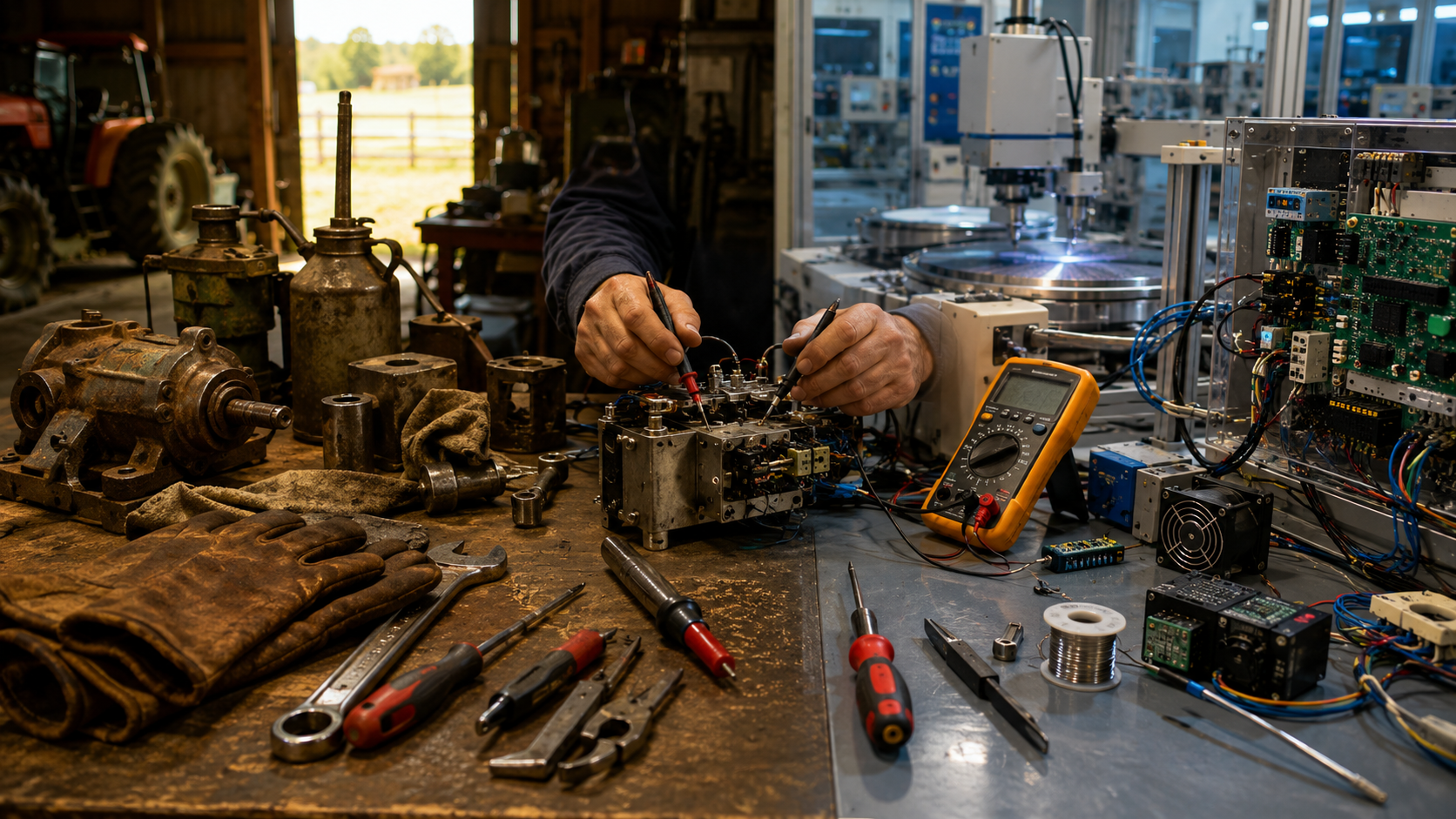
When I started at Skagit Valley College in 1990, I intended to become a dairy farm manager.
That meant learning animal husbandry, welding, and the practical skills needed to work around a farm. I expected a life that involved animals, equipment, physical systems, and plenty of work with my hands.
Then I got distracted.
College introduced me to things I hadn’t considered.
Chemistry fascinated me. I got involved with drama. Programming caught my attention.
One interest led to another, and my original plan gradually disappeared.
I eventually left Skagit with an Associate of Arts in General University Studies with an emphasis in chemistry. Years later, I earned my bachelor’s degree in computer science and business from Seattle University.
Between those degrees, life took me somewhere else entirely.
I Got Distracted for About 36 Years
Those distractions worked out pretty well.
I joined the U.S. Air Force and served in Explosive Ordnance Disposal. I eventually moved into software and spent roughly 25 years working across technology and professional services.
Along the way, I became a developer, business owner, consultant, operations leader, automation leader, revenue leader, and teacher.
I worked and lived around the world.
I helped build software, businesses, teams, processes, and automation systems. I taught people. I led people. I made plenty of mistakes. I learned from at least some of them.
I don’t look back at those 36 years and wonder what might have happened if I’d stuck with dairy farming.
I don’t regret the path I took.
Quite the opposite.
It gave me a life that 19-year-old Michael couldn’t possibly have planned.
But lately I’ve realized that I want something different from the next part of my working life.
I Want Tangible Problems Again
I’ve spent much of my career solving problems.
Over time, though, the problems became increasingly abstract.
Software.
Data.
Business processes.
Automation.
Revenue.
Organizations.
Leadership.
Culture.
These are real problems with real consequences. Solving them can create tremendous value.
But I can’t put organizational culture on a workbench.
I can’t grab a business process with my hands.
And when an automation stops working, I usually stare at a screen until I figure out which piece of software has become unhappy with another.
Nowadays, I want something more tangible.
There’s a piece of equipment in front of me.
It should do something.
It doesn’t.
Why?
Test it. Inspect it. Trace the problem. Understand what’s happening. Repair or replace something. Try again.
Make it work.
That appeals to me.
Apparently, part of the person who signed up for welding and animal husbandry in 1990 never entirely disappeared.
The Future Turns Out to Be Pretty Physical
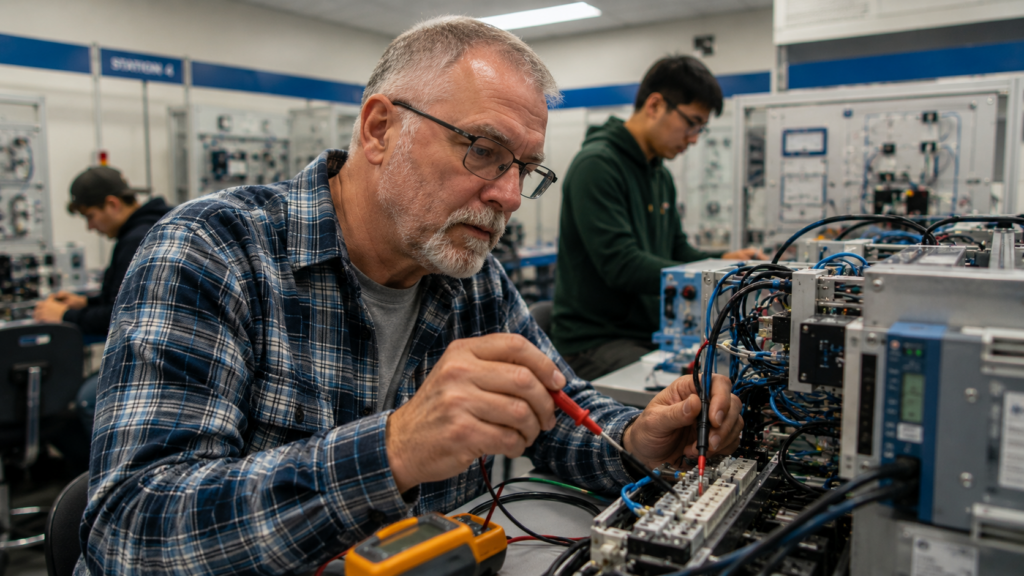
That’s part of what attracts me to microelectronics.
When we talk about semiconductors, we usually talk about the end products: processors, computers, phones, cars, data centers, artificial intelligence, and whatever comes next.
All of that can sound incredibly abstract.
Making those technologies possible isn’t.
Someone has to install the equipment.
Someone has to operate it.
Someone has to maintain it.
Someone has to understand the electronics, controls, sensors, mechanical systems, and processes involved.
And when something stops working, someone has to figure out why.
That’s the opportunity that interests me.
I can work with my hands again while participating in one of the technologies shaping our future.
There’s something wonderfully strange about that.
In 1990, I thought working with my hands might mean repairing farm equipment.
In 2026, it might mean troubleshooting equipment used to manufacture semiconductors.
The underlying attraction isn’t all that different.
The technology certainly is.
Nostalgia Isn’t a Career Plan
Of course, reconnecting with something my younger self wanted doesn’t automatically make this a good decision.
That’s an appealing story, but appealing stories can still lead to bad choices.
Going back to school costs money and time.
I’ll enter an area where other people know far more than I do.
Some of them will have decades of experience. Some will probably be younger than my children.
I may initially earn less than I could by pursuing another director-level role in operations, automation, or business.
The work may also look more attractive from the outside than it feels after I’ve spent months actually doing it.
I need to consider those possibilities.
There’s also a question I’ve had to ask myself:
Am I pursuing something meaningful, or am I simply attracted to something new because it’s new?
I don’t completely know yet.
That’s part of becoming a beginner.
What I do know is that several things line up.
I want more tangible work. I enjoy troubleshooting. I remain fascinated by automation and technology. I want to develop technical capabilities that I don’t currently possess. And Portland puts me near a substantial semiconductor industry.
The 19-year-old version of me provides an interesting clue about why this appeals to me.
He doesn’t get to make the decision.
The 54-year-old does.
I’m Becoming a Beginner, Not Erasing My Experience
I also need to be careful with the phrase “starting over.”
I’m not.
When I enter a microelectronics lab, I’ll be a beginner.
I won’t pretend that decades of business and software experience somehow make me an experienced semiconductor technician. They don’t.
I’ll need to learn.
I’ll need to ask basic questions.
I’ll probably misunderstand things.
I’ll make mistakes.
Someone half my age may need to show me how to do something that seems obvious to them.
Good.
That’s learning.
But I don’t walk into that classroom empty-handed either.
I know software.
I understand automation.
I’ve spent years troubleshooting systems and processes.
I’ve led organizations and worked across disciplines. I’ve taught adults and children. I’ve learned how differently people can see the same problem.
I’ve also learned, sometimes painfully, that experience doesn’t make my assumptions correct.
Those capabilities come with me.
Even chemistry, one of the subjects that originally distracted me from my agricultural plans, suddenly seems a little less like a distraction.
My career hasn’t followed a straight line. Maybe those lines don’t need to be straight to connect.
Maybe Careers Make More Sense Looking Backward
When we’re young, people ask us what we want to be when we grow up.
That’s a strange amount of responsibility to give someone who hasn’t done much growing up yet.
At 19, I thought I had an answer.
Then I discovered chemistry.
And drama.
And programming.
Then came the military, software, business, automation, leadership, teaching, and living around the world.
Each experience changed what I knew about the world and myself.
I don’t think the lesson is that I should have followed my original plan.
I think it’s almost the opposite.
I’m grateful I didn’t.
The wandering mattered.
But living deliberately also means occasionally looking around and asking whether the direction that made sense before still makes sense now.
Different seasons of life can produce different answers.
My question today isn’t:
What should I have become?
I find this one much more useful:
Given everything I’ve learned so far, what do I want to learn and do next?
Right now, I’d like to work with tangible problems again.
So I’m going back to school.
Happy 54th Birthday to Me
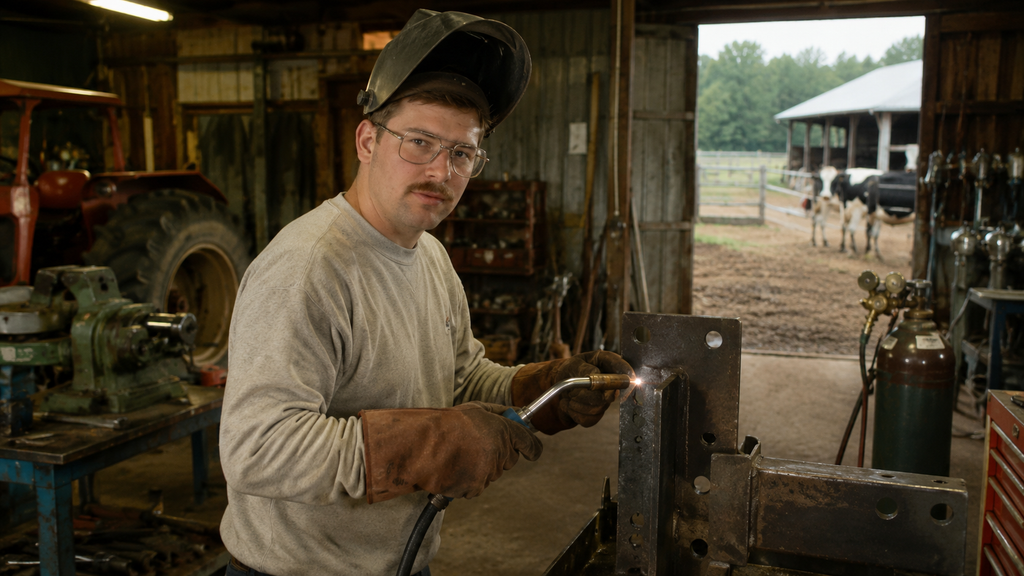
Thirty-six years ago, I entered college expecting to learn about animals, equipment, welding, and working with my hands.
I got distracted.
I’m glad I did.
Those distractions gave me experiences, relationships, failures, successes, and a life I couldn’t possibly have planned in 1990.
Now one of those old interests has found its way back around.
I get to become a beginner again.
I get to learn how physical systems work, how to install and maintain them, and how to troubleshoot and repair them when they don’t.
And instead of dairy equipment, I might eventually work with the machinery helping manufacture technology that barely existed when I first walked onto a college campus.
I don’t know where this path will take me.
That’s okay.
I’ve been distracted before.
It worked out pretty well.
Let’s see where this distraction takes me.
Leave a Reply
You must be logged in to post a comment.