
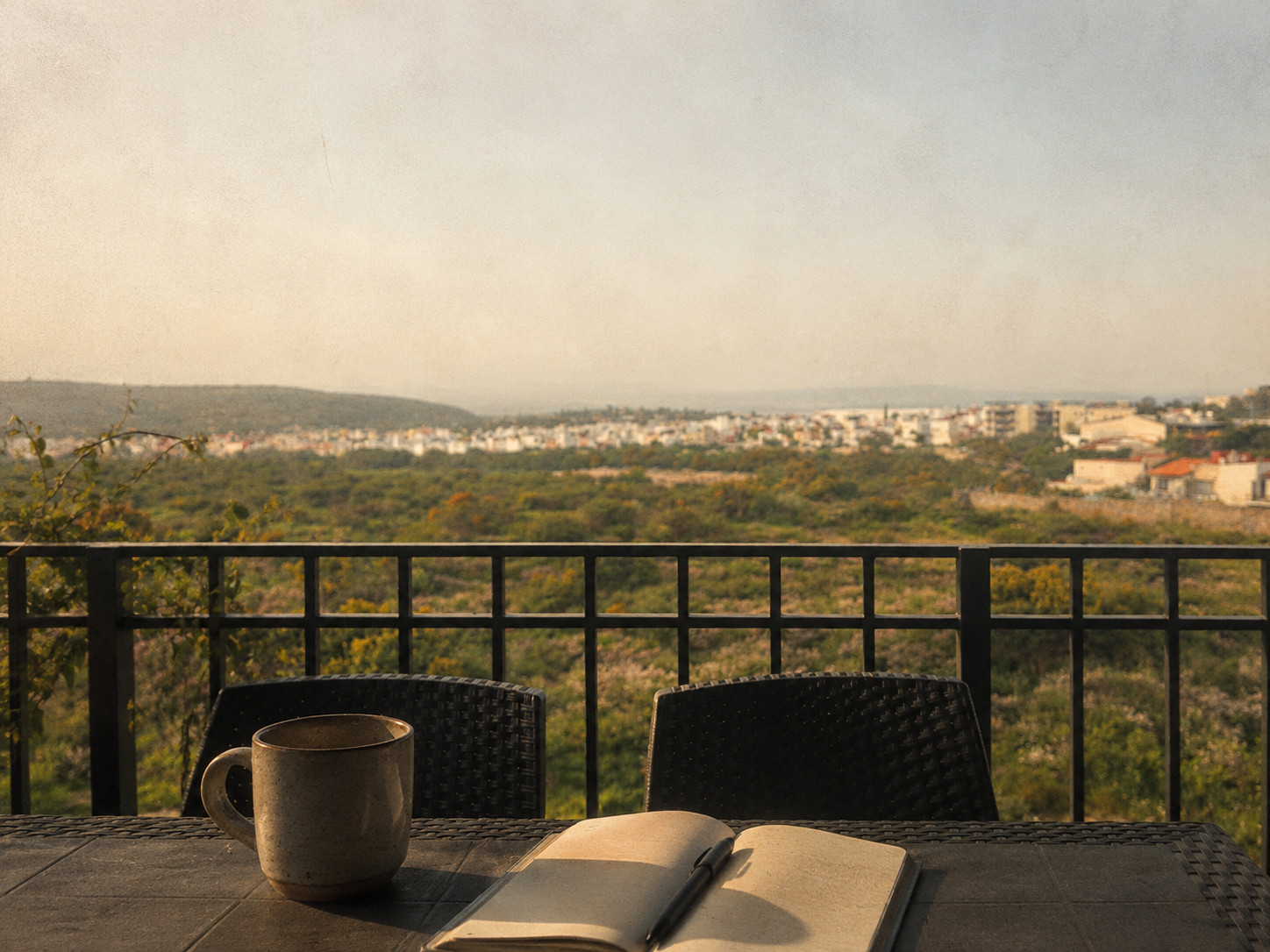
I am writing this from Mexico.
If you saw the photos on a curated feed: the vibrant bougainvillea, the warm stone courtyards, the kids laughing over plates of al pastor: you would think I’ve finally figured it out. You’d think this is the “living deliberately” dream we all chase.
But here is the truth of what happened: I am here because I have no good choices.
I am job hunting in a market that feels like a slow-motion landslide. I am working part-time in the deep hours of the night while my children sleep, trying to keep the gears turning. And most painfully, my family remains separated. Because of the logistics of life, career transition, and geography, I cannot be with everyone I love at the same time.
Choosing to be here for my kids meant being away from other essential parts of my life.
When people talk about deliberate living, they often paint it as a series of empowering “Yeses.” They make it sound like if you just get your purpose, principles, and values in order, life becomes a clean path of optimal decisions.
It doesn’t. Sometimes, living deliberately means standing in a room full of bad options and choosing the one that hurts the least, then having the courage to stay there.
The Reveal: Entering the Age of Dystoptimism
We are living through a strange cultural moment. In 2026, there’s a term for the mood many of us are feeling: Dystoptimism.
It’s the realization that the “old systems”—the predictable career paths, the stable economic ladders, the idea that hard work automatically leads to a balanced life—are largely crumbling. Dystopian headlines surround us, yet we are still expected to be “optimistic” about our personal futures.
Dystoptimism is what happens when you stop pretending that a “perfect” choice exists.
In my case, it revealed a hard truth: my best efforts in this moment cannot cover everything I want to do. I cannot be the perfect employee, the perfect job seeker, the perfect father, and a present family member all at once. Something has to be left on the table.
This is where most of us panic. We think that if we are “living right,” we shouldn’t feel this ache. We think that if we were more efficient or had better automation tools, we could bridge the gap.
But the gap isn’t a productivity problem. It’s a reality problem.

Why It Matters: Contentment is a Skill, Not a Feeling
If we don’t learn to be content with the “messy middle,” we will miss the very life we are trying to build.
I could spend my entire time in Mexico mourning the fact that my family is separated. I could spend every sunset scrolling through job boards with a sense of frantic inadequacy. If I did that, I would be “here,” but I wouldn’t be present.
When you have no good choices, your only real agency lies in how you inhabit the choice you made.
This matters because burnout recovery isn’t just about resting; it’s about realigning your expectations with your actual capacity. If you define success as “having it all together,” you are designing your own failure.
Deliberate living is the act of choosing your trade-offs with your eyes wide open. It’s saying, “I am choosing to be sad about this separation so that I can be fully present for these children.” It is an honest trade. It isn’t “happy,” but it is aligned with my values.
What It Looks Like at 2:00 am
It looks like working while the house is silent, knowing that tomorrow morning I will be tired, but I will be there to make breakfast. It’s a conscious compromise.
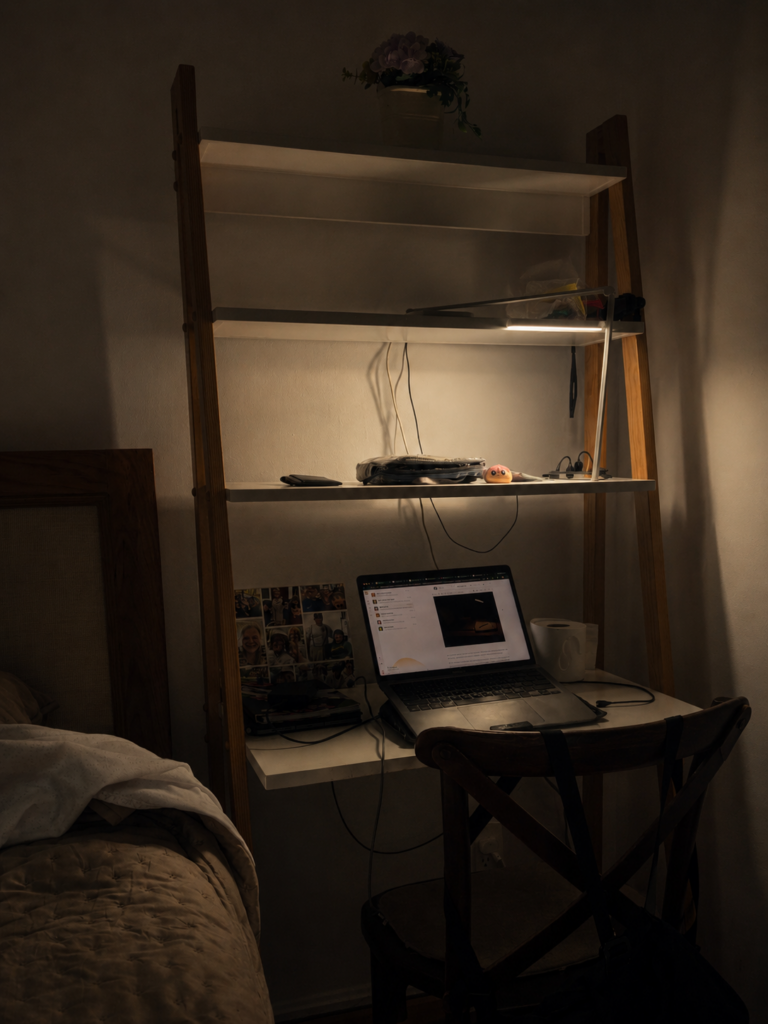
In a world that prizes “high performance” and “hustle,” choosing to work part-time while job hunting feels like a risk. It feels like I’m falling behind. But the principle of clarity over activity reminds me that doing more of the wrong things won’t get me to a better future.
How to Live When Every Option Hurts
If you find yourself in a season with no “good” choices—only different kinds of difficult ones—here is how to navigate it without losing your soul.
1. Name the Trade-Off
Stop trying to find the “hack” that lets you do it all. Identify what you are leaving on the table. Is it career speed? Is it personal comfort? Is it a relationship? By naming it, you take away its power to haunt you. You aren’t “failing” at that thing; you are intentionally deprioritizing it for a season.
2. Prioritize Resilience over Purity
In the Dystoptimist era, we don’t look for pure solutions. We look for the path that builds our resilience. Ask yourself: Which of these hard choices makes me a stronger, more integrated person six months from now? Choosing the “messy” path that keeps you connected to your children is a resilience choice. Choosing the “perfect” job that destroys your health is a fragility choice.
3. Practice “Aggressive Presence”
When you are in the moment you choose, be there entirely. When I am with my kids, I am not a job seeker. When I am working at 2:00 am, I am not a dad. This compartmentalization is a form of respect for the life you are actually living.
4. Lean into the “Human-Made”
The more automated and digital our world becomes, the more we need the grounded, the tactile, and the human. In my “no good choice” season, I find grounding in simple things: the texture of a stone wall, the taste of a real meal, the weight of a child’s hand in mine. These are the signals that life is still happening, even when the big picture is blurry.

The Grounded Takeaway
We often wait for the “perfect time” to start living fully. We think, I’ll be present once the job is secured. I’ll be happy once the family is all under one roof. I’ll be deliberate once the stress subsides.
But the “perfect time” is a fiction.
Living deliberately isn’t something you do when life is easy; it’s the tool you use to navigate when life is hard. Even when the choices are bad, even when the future is uncertain, and even when your heart is in two places at once: you can still choose how you show up.
Appreciate the moment, not because it’s perfect, but because it’s yours.
Stay tuned for Part 2 of this series, where we’ll talk about how to be present even when your heart is somewhere else entirely.
