Adaptive Resilience
Every Wednesday, my calendar is blocked.
No meetings.
No strategy calls.
No automation builds.
No “quick questions.”
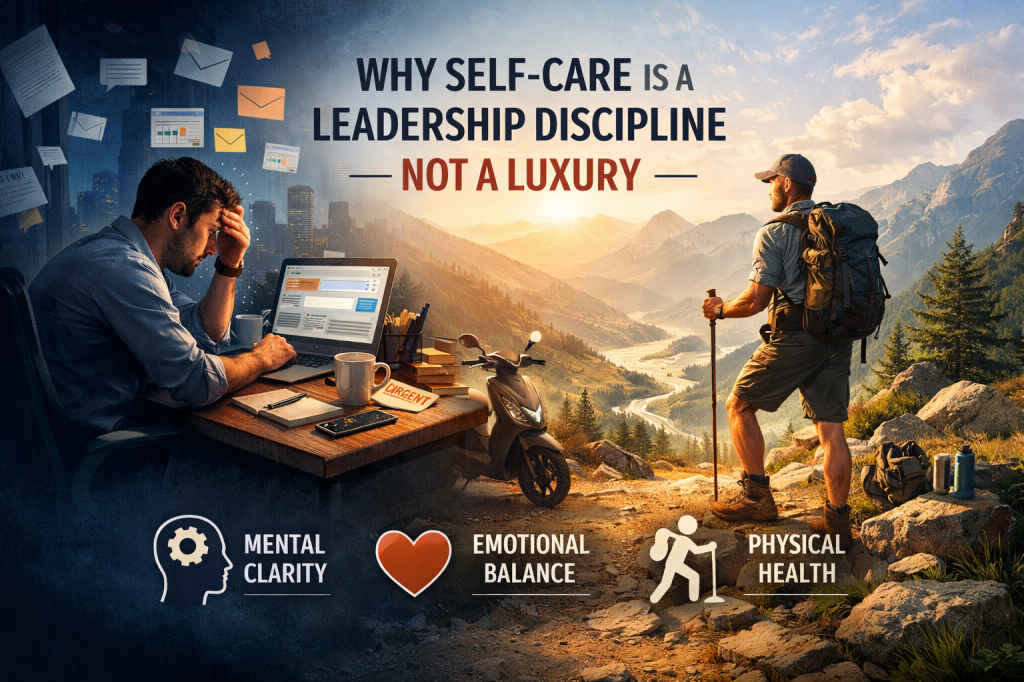
Wednesday is for a long hike. An hour on the scooter to get there. Four to six hours of sweat and mud. Backpack. Water. Sometimes a podcast. Often just my own thoughts.
And yet, most months, I only make it once. Maybe twice.
Last week, taxes kept me away.
I saw the email on Wednesday morning that my US tax return was rejected. So I sat down at the computer.
I told myself I was being responsible.
If I resolved it quickly, maybe the refund would come sooner and help me feel more secure about the summer time with my kids.
So I started plinking away at the keyboard. An hour turned into several.
Eventually, I realized something I could have known from the start if I’d read the rejection email more closely: it couldn’t be fixed until Friday anyway.
The hike never happened.
And the real loss wasn’t the exercise.
It was alignment.
I didn’t miss a hike.
I chose urgency over clarity.
The computer gives instant feedback. You type. It responds. You feel like you’re handling something. Responsible. Productive. In control.
The mountain gives delayed clarity. First, you scooter. Then you walk. Then you sweat. Then you breathe. Only later does the thinking settle. Only later do the better ideas show up.
Most leaders choose the screen.
I’ve done it for years.
When I’m at work, I do work. I execute. I respond. I build.
But I’m rarely thinking deeply about what I’m building. I’m moving version one forward. The immediate solution. The obvious response.
On the trail, something different happens.
There’s no Slack.
No email.
No artificial urgency.
Just the rhythm of walking.
Because nothing interrupts me, I can take a thought past its first answer. Past the second. Sometimes into a third iteration.
At work, I use and maybe refine version one.
On the trail, I quietly build version three.
On Thursday, I ship a new version one.
That difference compounds.
When I protect Wednesday, something subtle shifts.
I come home tired, yes. Hungry and sweaty, too. But I take a long shower. I trim my nails. I shave clean. I put on fresh clothes.
When I look in the mirror, I think, okay, you did it.
Thursday morning feels steadier because I went to bed earlier, as my body asked. My decisions feel less reactive. I’m not chasing the first solution. I’m choosing from better ones.
I also don’t carry that quiet guilt into the weekend, the “I should have exercised” voice. My aerobic work is done. I can be present with family instead of negotiating with myself.
The hike isn’t cardio.
It’s mental recovery.
It’s version control for my thinking.
It’s integrity with my own calendar.
And that’s where this becomes leadership.
The Lie of Responsibility
What makes it easy to skip Wednesday isn’t laziness.
It’s a responsibility.
Sitting at the computer feels virtuous. Handling the tax issue feels adult. Mature. Leader-like.
Movement feels optional. Work feels mandatory.
But here’s the question I failed to ask that morning:
Does this truly require action right now?
The refund wouldn’t arrive for over a month. The resolution itself couldn’t happen until Friday.
The urgency was emotional, not operational.
I wasn’t being responsible.
I was seeking immediate impact.
There’s something addictive about that. The quick dopamine of typing. The illusion of progress. The feeling of control.
The hike requires a delay. An hour ride before a reward. Mud before clarity. Boredom before breakthrough.
The screen offers instant feedback.
The trail offers depth.
And most of us choose feedback.
Self-Care as a Leadership System
When I say “Take Better Care of Myself,” I’m not talking about spa days or self-indulgence.
I’m talking about alignment.
Working on the right thing at the right time.
Feeling that the work matters.
Knowing it’s good enough, even if not perfect.
Being motivated because the path feels intentional.
When I feel good about myself, mentally, emotionally, and physically, I bring better energy to work. To my family. To conversations.
When I don’t, I’m suboptimal. Slightly reactive. Slightly misaligned.
That small erosion compounds.
We say we want productive teams. Focused teams. Creative teams.
But productivity is downstream of presence.
And presence is derived from mental, emotional, and physical well-being.
If leaders never disconnect, never move, never protect time, always choose urgency, what are we modeling?
We’re teaching:
- Busyness equals value.
- Boundaries are unsafe.
- Recovery is weakness.
- Responsibility means always being on.
That’s how burnout becomes culture.
Self-care is not a perk.
It is a leadership responsibility.
Because team productivity depends on modeled presence.
Calendar Integrity Is Self-Trust
There’s another layer here that stings more than missed cardio.
If I block Wednesday and don’t go, I break my own trust.
I’ve set an expectation: I’m unavailable. This is protected time.
And then I violate it.
For someone who believes in:
- Clear expectations.
- Empowered ownership.
- Sustainable leadership.
That matters.
You cannot expect ownership from others if you violate your own boundaries.
Calendar integrity equals self-trust.
Every time I override Wednesday for something that could wait, I teach myself that my priorities are negotiable.
Three years of that?
Flattened emotional range.
Less creative depth.
More reactive leadership.
Subtle slide toward resentment or depression.
Not dramatic. Just realistic.
I don’t want to be a responsible leader who isn’t alive.
Adaptive Resilience
In Sustainable Ownership, resilience is not about grinding harder.
It’s about adapting intelligently.
That starts with the leader’s nervous system.
On the trail, I process conversations before they happen. I think through second- and third-order consequences. I rehearse how I might respond instead of reacting in the moment.
Sometimes I don’t find the solution.
But I find movement.
And that matters.
Knowledge work is not factory work.
Our output is thinking. Judgment. Emotional regulation. Perspective.
Mental capacity is a strategic asset.
Emotional steadiness is a performance multiplier.
Physical health stabilizes mood and cognition.
If we don’t design for these, we design for fragility.
The hike isn’t a luxury because it protects the system that makes decisions.
A Simple Discipline
Before overriding Wednesday nowadays, I try to ask:
- Does this truly require action right now?
- What is the actual cost of delay?
- What is the cost of self-betrayal?
- Am I choosing activity over clarity?
Sometimes the hike becomes shorter. One hour instead of four.
That’s fine.
Discipline is not intensity.
It is consistency.
Even if I only ride out and walk for an hour, I’ve honored the boundary. I’ve moved. I’ve breathed. I’ve reminded myself that I am not just a task processor.
I am a human being responsible for the quality of my presence.
Living Differently
My purpose is simple: Live fully by living differently.
In a world accelerating through AI, automation, and an endless stream of notifications, living differently means designing for presence.
It means protecting daylight.
It means recognizing that version-three thinking requires space.
It means accepting that I can always work at a computer.
Yet, I only get so many Wednesdays with daylight.
And if I want to lead with clarity, steadiness, and integrity, then taking better care of myself is not optional.
It is the work.

Leave a comment