The Cost of Lost Ownership
In 2018, I lost two of my best team members. Not because they lacked talent. Not because they weren’t committed. They left because I failed to give them clarity.
I hadn’t told them why our work mattered, what success would look like, or how we’d decide together. They felt like cogs in someone else’s machine. They left for places where ownership was possible.
Gallup estimates that disengagement like this costs companies $7.8 trillion annually. But it’s not just financial, it’s human. The energy drains, the culture frays, and eventually, the brightest people walk away.
That’s when I learned: ownership isn’t a personality trait. It’s a design choice.
The Anatomy of True Ownership
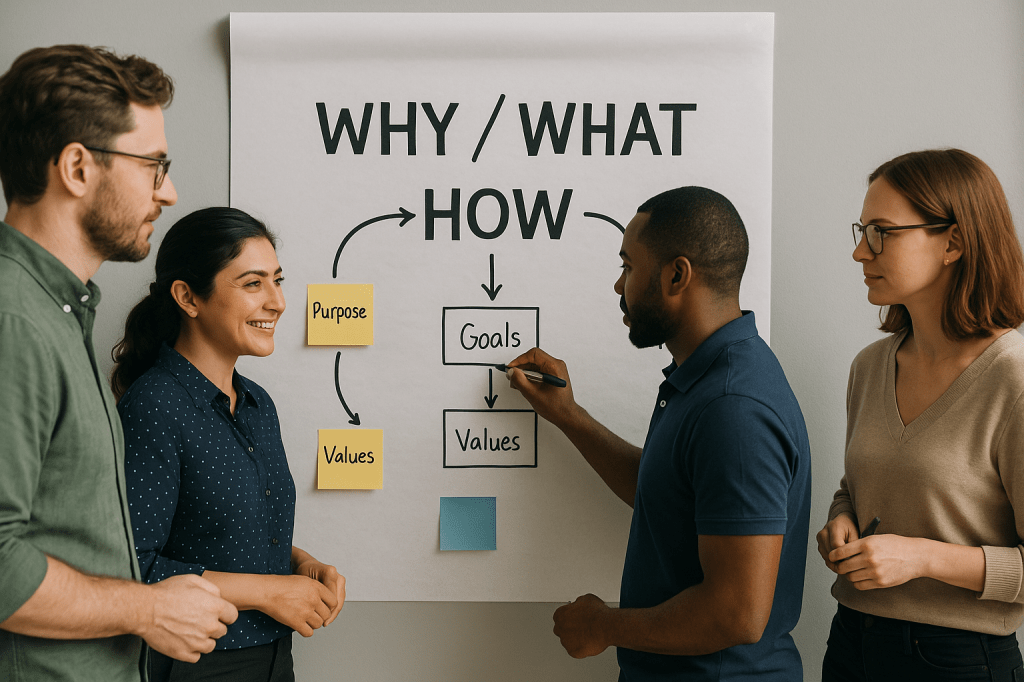
Ownership is clarity, not control. It grows from three questions:
- Why → Purpose. Do people know the meaning behind their work?
- What → Outcomes. Are goals visible and shared?
- How → Values. Are daily behaviors modeled and reinforced?
When starting at LN Webworks, we offered over fifty services. Everyone was busy, but no one took pride in it. When we narrowed it down to 4 key services, and then refined further to just eCommerce growth for digital leaders as our starting point, the brain fog lifted.
Sales and marketers could see how their work stacked up in terms of impact. With a bonus of granting designers and developers more exciting work. That’s when ownership shifted from compliance to pride.
The Traps That Kill Ownership
Most leaders don’t intend to erode ownership. But three traps show up again and again:
- Avoiding Hard Conversations. I once waited months for people to “improve.” By the time I acted, I had lost both trust and talent. Ownership dies in silence.
- Only Rewarding the Big Wins. For the services refinement, at LNWW, three teammates quietly rebuilt the basics so we could pivot. Recognizing them for “just doing their job” in Slack reminded everyone that small, steady accomplishment matters too.
- Designing for Efficiency Over Care. Burnout taught me this the hard way. At Axelerant, our automation saved thousands of hours. But the real win wasn’t efficiency; it was reinvesting time into mentoring and human connection.
Ownership dies when processes drain energy instead of restoring it.
From Heroic Effort to Sustainable Ownership
Here’s the contrarian truth: ownership can’t rest only on individuals.
Leaders love saying, “Act like an owner.” But if onboarding is broken, metrics are opaque, and decisions are top-down, ownership can’t survive.
That’s why I built the Sustainable Ownership Framework:
- Vision Alignment clarity of purpose.
- Consistent Accountability, trust without fear.
- Empowered Decisions autonomy with integrity.
- Adaptive Resilience systems that flex with pressure.
- Stakeholder Trust relationships are built on gratitude and respect.
- Shared Knowledge cultures of learning, not silos.
- Financial Foresight stability that supports ethics.
Think of it as shifting from heroes holding things together to systems holding people up.
The Freedom Side of Ownership
In 2021, when the HR team began more fully automated onboarding, they enabled saving 2,000+ hours a year. But what mattered wasn’t the hours; it was what came next.
Instead of pushing forms, they drafted better guidelines, hosted more engaged conversations, and empowered onboarding buddies. They mentored. They built culture. Automation didn’t replace them; it gave them back ownership of what mattered, their time and connection to others.
That’s the paradox: true ownership isn’t more pressure, it’s more freedom.
Practical Starting Points
If you’re asking, where do I begin? Try these:
- Start each project with a shared “why” statement.
- Replace annual reviews with weekly/monthly 1:1s, short, safe, and consistent.
- Recognize effort in motion, not just at the finish line.
- Audit your systems: which parts generate energy, and which drain it?
- Run your leadership through the 7 Sustainable Ownership Principles once a quarter.
Ownership is a muscle. It grows when it’s used.
Choosing Ownership Over Compliance
The opposite of ownership isn’t chaos. It’s compliance. And compliance has never built resilient teams.
When leaders design for clarity, when systems provide energy, and when people are trusted to make decisions, ownership emerges naturally.
I’ve lived with the cost of losing trust and ownership. I’ve seen the freedom that comes with getting them right. And I believe that if more of us owned what we do, work wouldn’t just pay the bills; it builds lives worth living.
Where in your work do you feel like an owner today, and where do you feel like a cog? Start there. And if you want help shifting your team from compliance to ownership, reach me at Peimic Contact.

Leave a comment