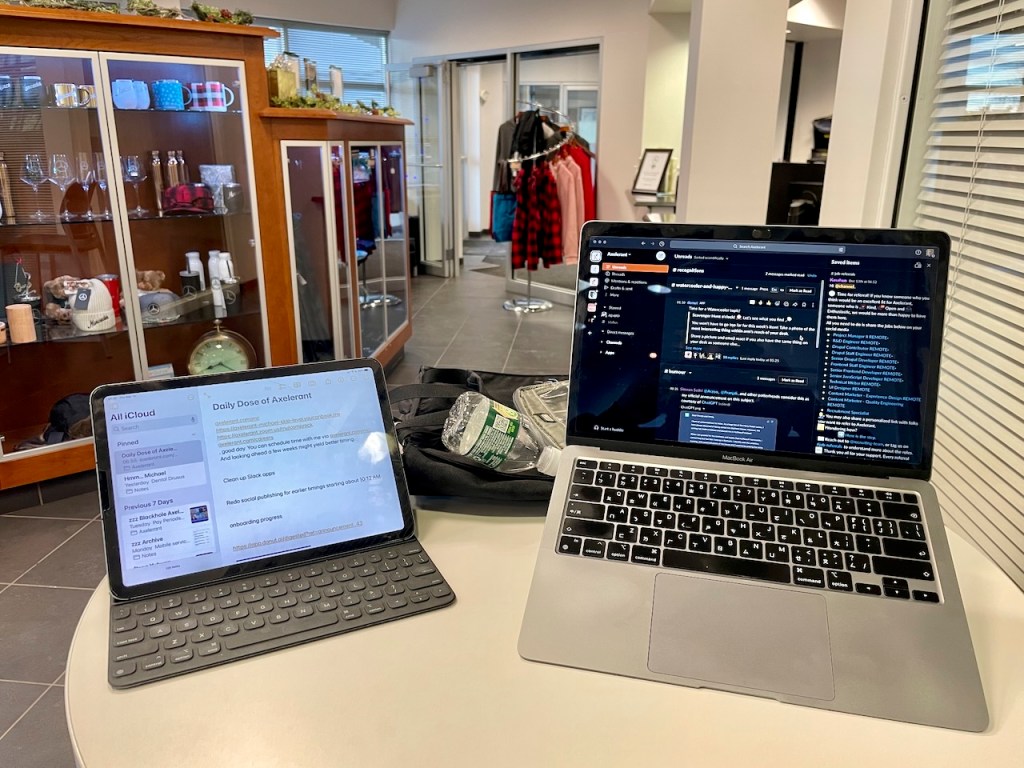
Remote teams are no longer an experiment. They are the norm. Yet, while technology enables distributed work, it’s leadership that sustains it.
I’ve spent the past 20 years building, breaking, and rebuilding distributed organizations. From serving as Axelerant’s COO, a fully remote company across five time zones; to military service where camaraderie was forged in life-or-death stakes, my journey taught me that managing people across distance is never about tools alone. It’s about trust, culture, and conscious choice.
What follows are not formulas. They are lived lessons, drawn from retreats in India, late-night Slack conversations, firing someone twice, and even my failures as a husband and father. Because leadership, remote or otherwise, is always personal.
Lesson 1: Culture Is the Compass
At Axelerant, version three of codifying the culture used three words: Enthusiastic. Giving. Open. An “EGO.”
It sounds simple, but that clarity saved us countless times. I remember a retreat in Rishikesh where challenging, almost brutal, conversations surfaced. What mattered most to us? Passion. Generosity. Openness.
Out of that discomfort grew alignment. Silence became recognized as acceptance, recognition became deliberate, and cultural fit, not résumé polish, determined whether someone stayed or left.
I’ve learned this in family life, too. Without shared values, relationships unravel, no matter how much history binds you. That was one lesson from the painful end of a 20-year marriage. At work, as at home, culture isn’t the wallpaper. It’s the floor you walk on every day.
Leadership reflection: I don’t dictate culture; I live it. I hire and fire by it. And I must be prepared to defend it when it’s uncomfortable.
Lesson 2: Trust, But Verify
The military taught me that trust is survival. You don’t question whether your teammate cuts the correct wire on a bomb, you trust them. But you also train, drill, and verify relentlessly.
In business, I once rehired someone I’d already fired, twice. Each time, I leaned too hard on trust. Each time, accountability caught up with me.
Remote work magnifies this tension. I must extend autonomy, or people feel suffocated. But blind trust without verification corrodes outcomes and morale. The solution is metrics, milestones, and 360° feedback. Verification isn’t suspicion; it’s respect for the collective mission.
Leadership reflection: I trust people to rise, but I also give them the rope of accountability. Otherwise, both I and the team fall.
Lesson 3: Feedback Is Fuel
For years, feedback at Axelerant was ad hoc, surfacing only when things went wrong. Morale dropped. Confusion spread.
The turning point came when I established monthly one-on-one sessions. These weren’t performance interrogations. They were clarity conversations: about growth, expectations, and even personal struggles. I added a life coach for those who wanted it, and suddenly, feedback became a pathway, not a punishment.
I failed at this in my personal life for a long time. I avoided giving and asking for feedback in my marriage until silence became resentment. Remote teams, like families, cannot thrive on unspoken expectations.
Leadership reflection: Feedback must be consistent, safe, and expected. It’s how I honor people’s potential.
Lesson 4: Connection Is Human
Slack threads don’t replace shared meals. I’ve seen people crumble under the loneliness of remote work even while technically “connected” all day.
That’s why I prioritized meetups: sometimes a retreat in Goa, sometimes just a birthday lunch in Noida. Those weren’t perks; they were lifelines.
My travels, 3 million kilometers living across 10 countries, taught me that people need touchpoints. Whether in cafés in Vietnam or hikes in Taiwan, I’ve seen how sharing moments beyond work builds reservoirs of trust I can draw on later during conflict.
Leadership reflection: I never mistake efficiency for connection. Leading remotely means deliberately engineering human moments.
Lesson 5: Process Creates Freedom
“How do you repeat success?” By repeating the steps.
Early on, I wasted hundreds of hours reinventing simple tasks: deploying servers, writing proposals, launching campaigns. When I finally started documenting processes, the chaos quieted. Checklists evolved into automation, and freedom followed.
This lesson was mirrored in my own debt recovery journey. Crawling out of $380,000 in debt took over a decade. The breakthrough wasn’t a heroic effort; it was a process. Small, repeatable steps that are compounded over time.
Leadership reflection: Documentation feels bureaucratic until you realize it’s the recipe that allows creativity to thrive.
Lesson 6: Tools Are Leverage, Not Luxury
Once, I lost nearly 100 person-hours creating a sales proposal because we lacked a quoting tool. Saving money had cost me far more.
The right tools like Slack, HubSpot, automated deployment systems aren’t about convenience. They’re about sustainability. Yet the real trap is believing tools alone solve problems. Without culture, trust, and process, tools are just shiny distractions.
Leadership reflection: I invest in tools that remove friction. But I remember: the tool doesn’t create accountability; the people do.
Closing: Leadership Beyond Distance
In the Air Force, I learned camaraderie when the stakes were high and lives depended on each decision. At Axelerant, I realized that culture erodes unless tended daily. In my personal life, I’ve learned, sometimes painfully, that relationships fail without feedback and alignment.
Remote leadership is not a question of geography. It’s a question of integrity.
As one teammate once put it:
“Right tools, trust & responsible teammates are the key elements to remote working.” –Parth Gohil
Leading remotely, like living fully, requires conscious choices. To smile before judging. To respect differences. To act with purpose even when it means saying no.
Not perfectly. Just intentionally.
Because distance isn’t the enemy. Disconnection is.

Leave a comment