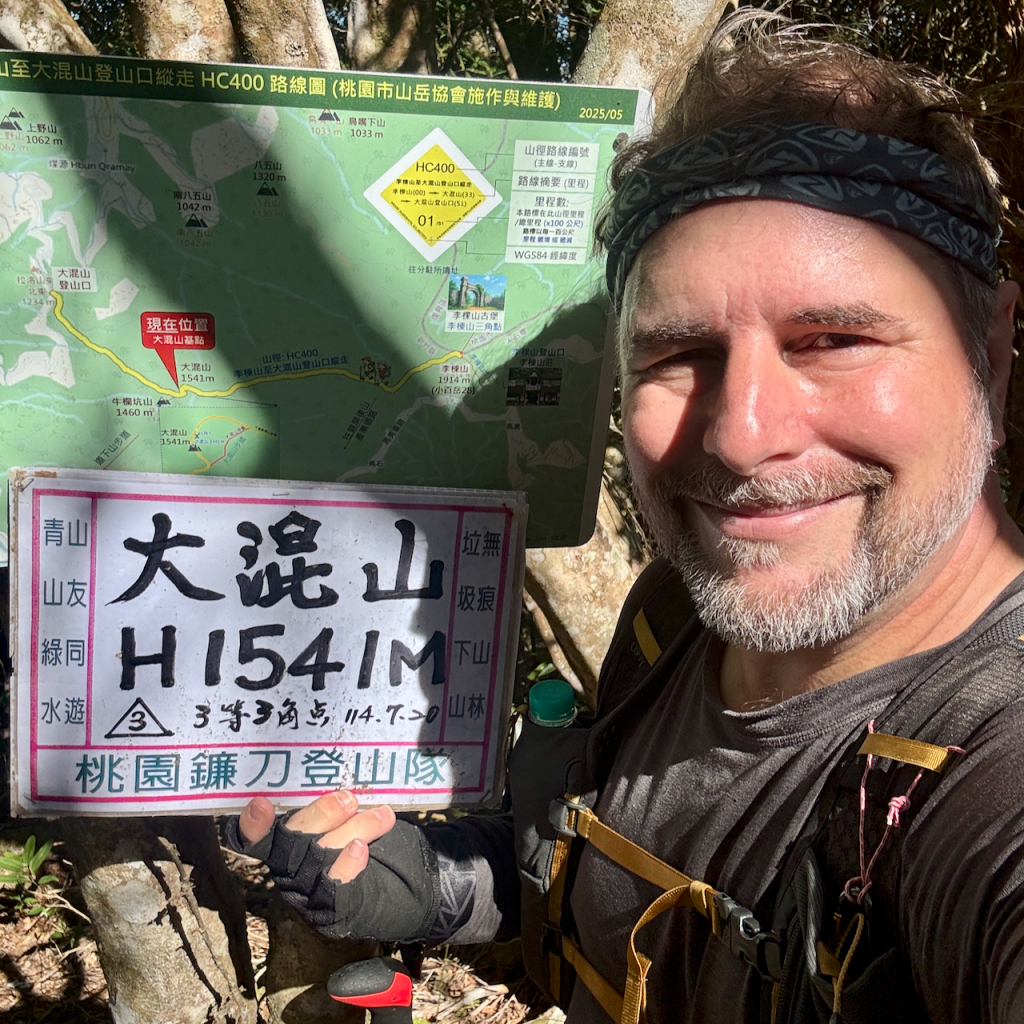
A few years ago, I found myself gripping a bamboo stalk on a muddy hillside outside Qionglin.
I had ridden my scooter up through a cemetery to find a trailhead I hadn’t been on before. The climb looked manageable: steep, sure, but familiar. I hopped off, tightened my shoes, and started up.
Ten minutes in, my heart began pounding harder than usual. A headache crept in. My vision narrowed, black edges closing in.
“It’s okay,” I told myself. “It’s okay.”
I took another step.
Then I stumbled.
I didn’t fall, but I had to grab something to steady myself. For a moment, I just stood there, staring at the ground, asking a simple question:
What’s wrong with me?
That’s when my doctor’s warning stopped being information and became reality. My heart has weakened. I can’t push the way I used to.
The hill hadn’t changed.
I had.
And if I kept pretending otherwise, I wouldn’t just be risking a bad afternoon. On a ridge trail, one fainting spell can turn into a long fall. A loving family can become a mourning one.
That was the moment I finally accepted something I’d been resisting:
Resilience isn’t pushing harder.
Resilience is pacing wisely.
The Myth of 150 Beats Per Minute
There’s a kind of leadership that feels like hiking at 150 beats per minute.
Fast. Intense. Productive. Impressive.
You run two campaigns at once.
You rebuild the brand while refining messaging.
You chase AI opportunities while tightening operations.
You say yes to everything important because everything feels important.
And you keep telling yourself the same lie I told myself on that hill:
“It’s okay. It’s okay.”
But at some point, the vision narrows.
Teams burn out.
Trust erodes.
Sleep disappears.
You work hard for months, maybe years, and there’s little that truly compounds.
Intensity masquerades as progress.
I’ve lived that.
Learning to Hike at 130
I still hike.
But now I take a step and pause to breathe. Sometimes I take four breaths before the next move. I watch my heart rate. I aim for 130, not 150.
At 130, I can move steadily.
I can sweat.
I can enjoy the climb.
And I can come home.
The lesson carried straight into my work.
Instead of stacking initiatives, we focus on one major campaign at a time.
Instead of assuming a four-hour plan, we admit it might be eight or nine.
Instead of compressing timelines to feel capable, we expand them to reflect reality.
I block an hour for work that often takes twenty-five minutes.
I schedule ninety minutes for writing that may take sixty.
I move tasks into a holding pen without guilt and without pretending I’ll “get to them tomorrow.”
Slack is not laziness.
Slack is oxygen.
The First Domino
If I return to 150 bpm living, the first thing I lose is trust in myself.
When I set unrealistic expectations, I break promises.
When I break promises to myself, I start breaking them to others.
Health declines.
Sleep worsens.
Relationships thin.
Teams feel the urgency and mirror it.
Quality drops.
The collapse rarely announces itself as a collapse. At first, it looks like commitment.
Until it doesn’t.
Consistency Compounds
At 150 beats per minute, I can force a burst: a big push, a dramatic week, a heroic sprint.
At 130, I can show up again tomorrow.
That’s the difference that matters.
Resilience isn’t a sprint. It’s not even a marathon. For me, it’s walking steadily: refusing to stop, refusing to pretend I’m limitless.
It’s recognizing that excitement can outrun capacity.
That ambition must be calibrated to reality.
That boundaries aren’t weakness: they’re wisdom.
Resilience is not grit.
It is respect.
Respect for the body.
Respect for relationships.
Respect for organizational capacity.
Respect for time.
And when we respect those limits, something unexpected happens:
We go further.
And we come home.

Leave a comment